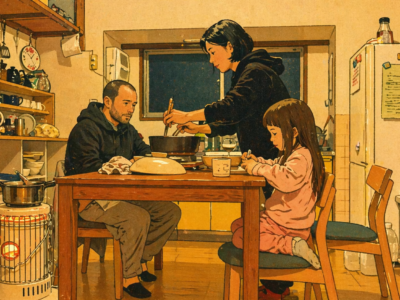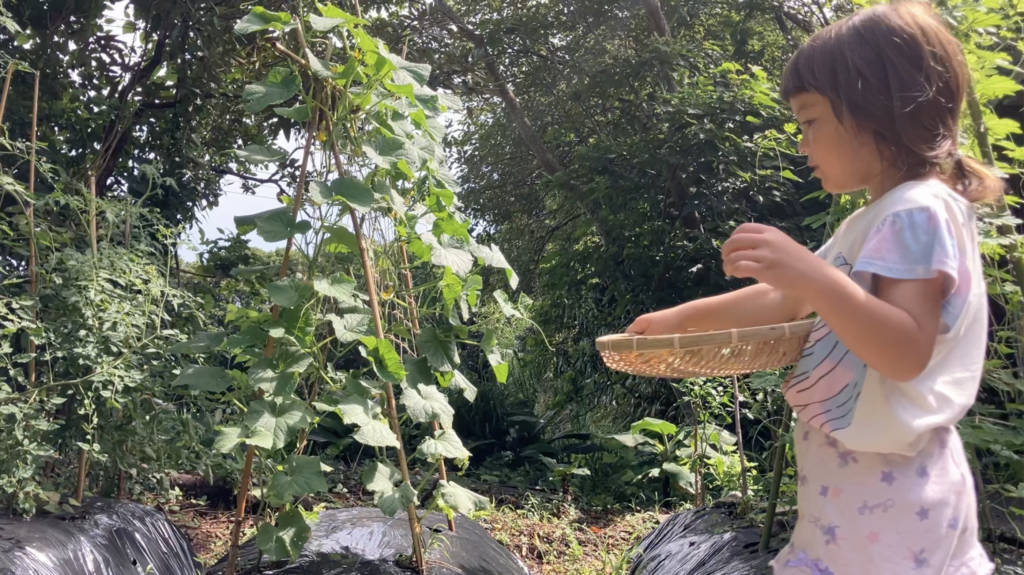
Before moving here, our family lived in a typical Japanese apartment on the fourth floor.
We had a balcony, but no garden – no place where we could grow our own food.
When we finally moved to the countryside and lived in a house with a yard, the first thing we wanted to do was start a vegetable garden.
Growing vegetables was completely new to us. But because we have a young child, we really wanted to grow food without chemicals. At the very least, we wanted the vegetables we grow ourselves to be safe.
That’s when we discovered Kin-chan farming – a method of natural farming without fertilizer or pesticides.
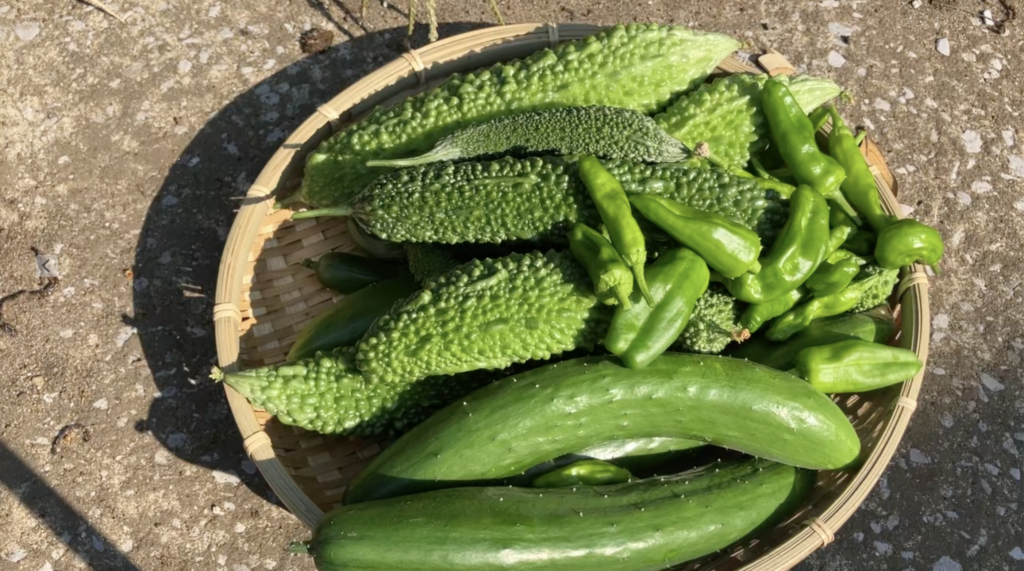
What is Kin-chan Farming (Natural Farming Without Fertilizer)?
A Japanese method of natural farming without fertilizer or pesticides, developed by Toshimichi Yoshida (known as “Kin-chan Sensei”). Based on carbon-cycle farming, it builds soil health by encouraging beneficial fungi to grow naturally – perfect for home gardens.
Kin-chan farming is based on a method called carbon-cycle farming, adapted to be easy enough for home gardeners to practice.
The idea is simple: instead of adding fertilizer from outside, you mix fallen leaves and dead branches into the soil. This encourages filamentous fungi (a type of mold) to grow in the soil. These fungi then help your vegetables grow naturally.
Rather than feeding the plants, you draw out the natural power of the soil itself.
It’s a simple idea, but also a very profound one.
The First Wall: Building the Beds
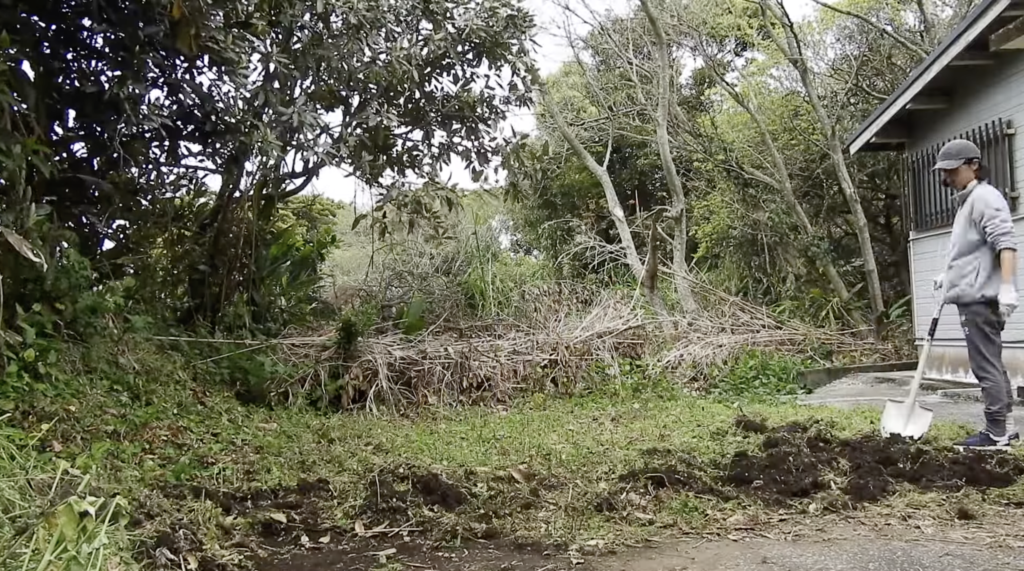
The hardest part of this method was preparing the raised beds.
We had to build beds about 50 to 60 centimeters tall. Once built properly, they can be used for several years.
Since it was heavy work, my husband Steven – who quietly enjoys physical exercise – did most of the lifting. I, on the other hand, ended up with a sore back (haha).
Once the beds were finished, we didn’t plant anything right away. We waited about three months, letting the soil rest so the fungi inside could grow.
Gardening is Deeper Than I Thought
I used to think that once the beds were ready, all you had to do was plant.
But I quickly learned that every vegetable grows differently. Some need stakes for support, others need their side shoots pruned. Each plant has its own way of being cared for.
Some Years Work, Some Don’t
Once we started growing, I realized that no two years are ever the same.
In our first and second years, our cucumbers thrived. We harvested so many. But by the third year, they barely grew – the harvest was almost nothing.
On the other hand, our peppers and shishito – which I thought would only last one season – survived the winter and gave us fruit the next year too.
One summer, we went back to my hometown for a while and couldn’t take care of our tomato plants. When we returned, there was almost no fruit – but the plants themselves had grown unbelievably big.
Even when we did the same things, the results were always different.
Nature is Never the Same
The reason is simple: nature is never the same.
The weather changes. The soil changes. And maybe the vegetables themselves are different beings every year.
What I learned through this is something simple but important – to observe carefully, every single time.
The Joy of Eating What We Grew
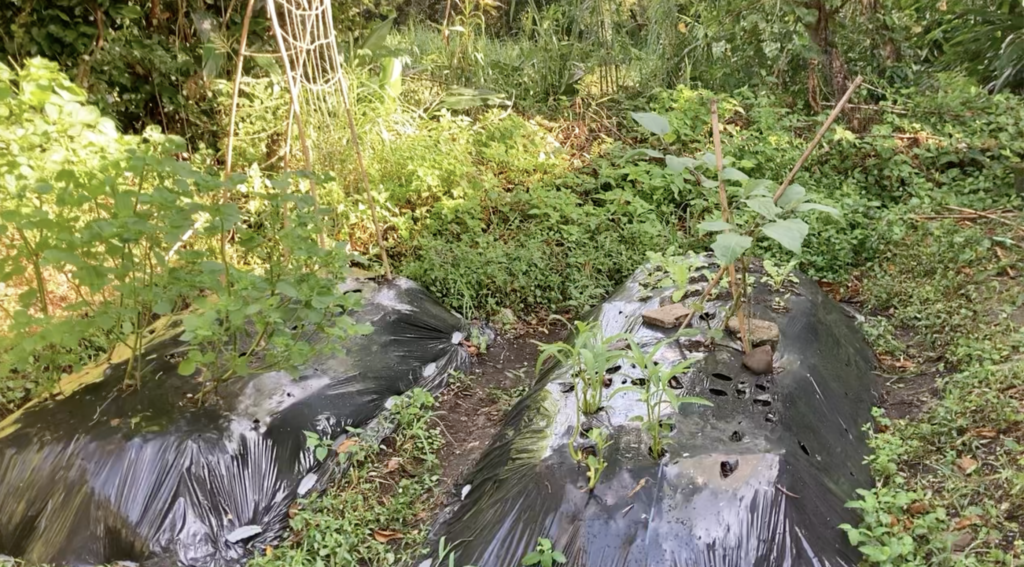
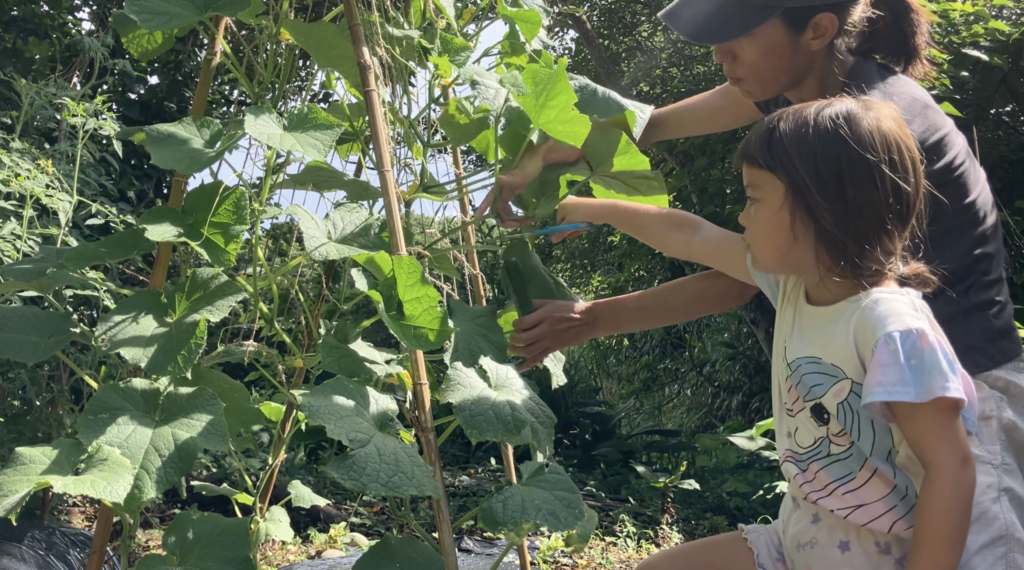
Our daughter loves picking cucumbers and tomatoes from the garden and eating them right there on the spot.
We don’t harvest large amounts. But the time we spend eating something we grew ourselves feels like a small, quiet happiness.
Eating a vegetable when you know exactly how it grew feels different. Special, somehow.
And at the same time, I’ve started to feel grateful for the vegetables we buy too – knowing that someone took the time to grow them with care.
Why Grow This Way?
Modern farming with pesticides and chemical fertilizers can grow vegetables more efficiently.
But these methods can also have an impact on the environment.
For example, excess nitrogen and phosphorus from fertilizers can be washed by rain into rivers and groundwater, causing water pollution (eutrophication).
Growing vegetables without fertilizer or pesticides isn’t just gentler on the environment – it also costs less.
With fertilizer prices rising these days, trying this kind of method – at least on a home garden scale – might be worth considering.
From Seeds, To What’s Next
Starting a home garden has come with so many failures.
But through them, I’ve felt the rhythms of nature and learned more than I expected.
I still remember the moment I saw our first tiny sprout push out of the soil.
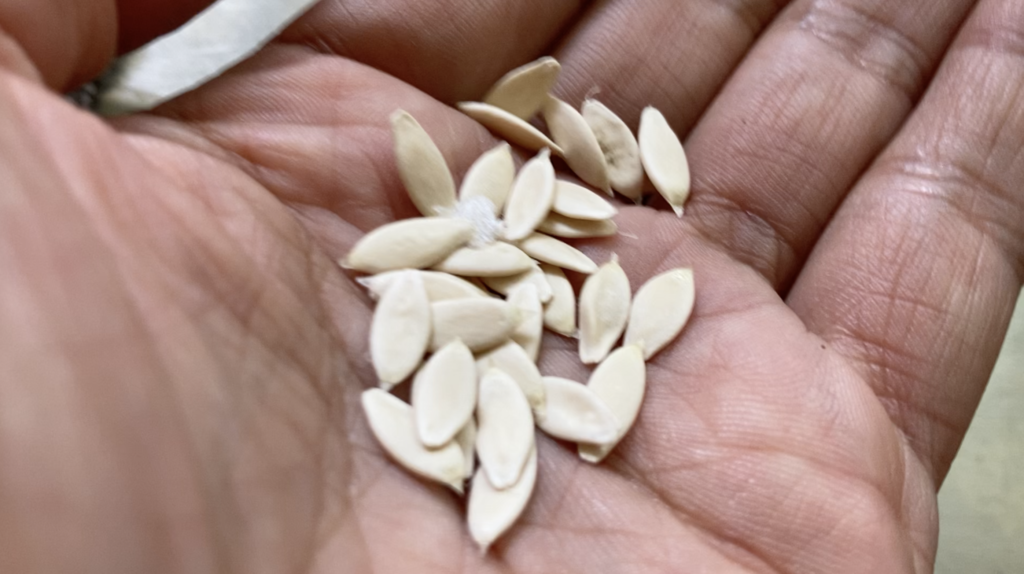
Now, instead of just harvesting, we’re also trying to save seeds – to carry the cycle forward into the next season.
Looking Ahead
The time we spend eating vegetables we grew ourselves, and the lessons learned in years when nothing grew well – both are essential parts of life in the countryside.
Growing vegetables through natural farming without fertilizer has changed how we see food, nature, and daily life.
While feeling the cycles of nature a little closer, we want to keep enjoying this life, one season at a time.
→ Watch our island life on YouTube
We share simple, quiet moments from life in rural Japan.